Unverified. We have not been able to confirm the details of this account.
Reported The Amplifier Brilliant
Stanford’s AI “virtual biotech” designed a lung-cancer therapy a real drugmaker later matched
Stanford built a virtual biotech of tens of thousands of AI scientist agents. From older public data alone, they sketched a lung-cancer treatment idea. Months later an unnamed major drugmaker independently landed on the same approach — and that therapy later won FDA breakthrough status. Builders: treat agent designs as hypotheses until wet-lab proof catches up. Readers: a matching drug in someone else’s pipeline is a good sign, not a finished AI medicine.
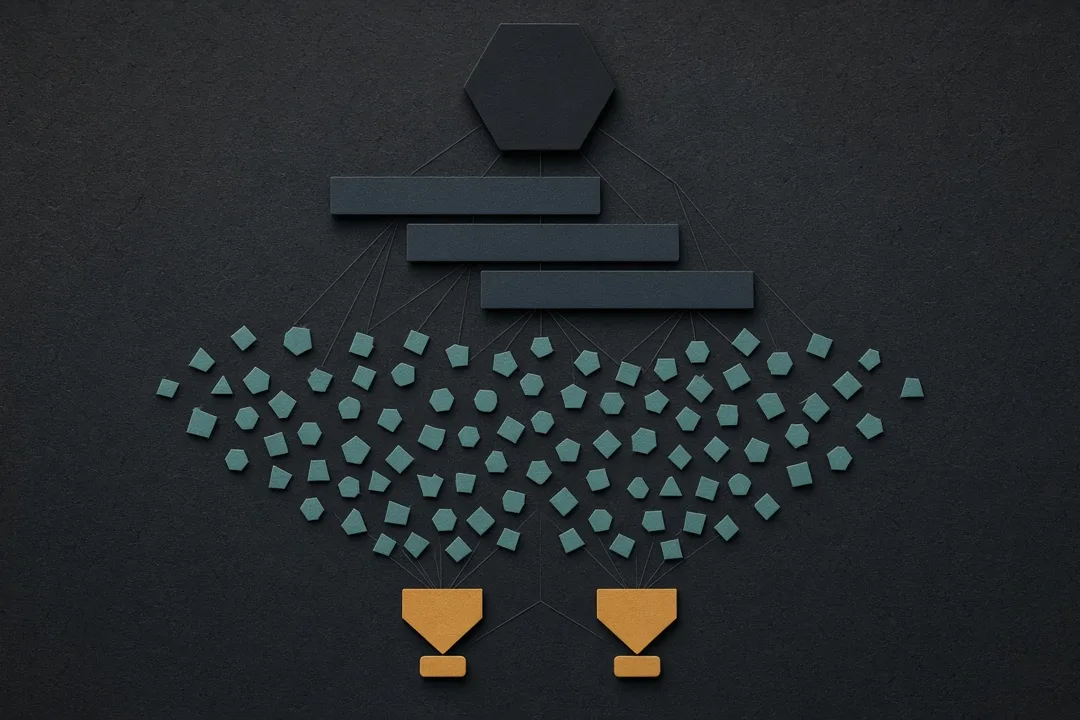
Treat agentic virtual-company designs as hypotheses until wet-lab and independent clinical validation catch up — especially when the matching real-world therapy is already in someone else’s pipeline.
Drug discovery is slow, expensive, and often fails. Stanford researchers asked a blunt question: what if a whole company of AI agents tried the hard parts anyway?
In September 2026 they published the Virtual Biotech in Science. Lead author Harrison Zhang and senior author James Zou, of Stanford Medicine, built a multi-agent system — many specialised AIs working together — organised like a real drug company. A chief science officer agent leads teams that look for targets, sketch treatments, and think about trials. Stanford’s own write-up says the “company” has tens of thousands of AI employees. No lab benches. No payroll.
The AAAS Science press package gives the hard trial numbers. More than 37,000 AI clinical-trialist agents worked through 55,984 clinical trials. They linked drug targets to how genes behave in specific cell types. Drugs aimed at genes tied to particular cells were 48% more likely to reach the market. They were also linked to 32% fewer harmful side effects. Stanford’s news piece adds another figure: drugs aimed at switch-like (on-off) genes were 40% more likely to move from phase 1 to phase 2.
Then came the sharp test. The team pointed the agents at B7-H3, a protein long studied in lung cancer. The agents could use only information published before January 2025. They proposed an antibody–drug conjugate — in plain terms, a guided tag that finds cells with lots of B7-H3 and delivers chemotherapy there. In August 2025, a private, well-established pharmaceutical company independently arrived at the same B7-H3 approach. That therapy later won FDA breakthrough therapy designation, a fast-track status after early human evidence of benefit. Stanford does not name the company or the drug. Zou calls it independent validation of the virtual biotech’s design. He is not chasing B7-H3 further. Another firm is already taking it into the clinic.
Hope needs a brake. The AAAS release says the system still depends on the quality of the data it sees. It is not ready for poorly studied diseases or targets. Findings still need wet-lab checks — real experiments, not just agent reports. Zou’s next step is to test other candidate targets in physical labs. Humans remain the bridge from an AI idea to something that can help patients.
The pattern is amplifier. Give specialised agents a mountain of fragmented trial and biology data, and they do what they were built to do: pull it together at a scale that is hard for one human team. In this case, they also proposed a therapy design that a real drugmaker later matched on its own.
What to sit with
AI can speed up discovery ideas — but a matching real-world drug is still a hypothesis until humans prove it.
Worth arguing about
- If an AI swarm and a drugmaker land on the same design, who owns the insight — and who owns the risk?
- Does someone else’s breakthrough count as a win for the AI, or just lucky timing?
What’s at stake
- Thousands of AI agents sketched a lung-cancer treatment that a real drugmaker later matched.
- They used only public information from before 2025 — then an unnamed company reached the same idea on its own.
What this gets right
- Stanford and Science put clear trial numbers beside a named target and a real-world match.
- The authors still insist wet-lab checks come next — they are not selling a finished AI drug.
What stays messy
- The drugmaker and brand stay unnamed, so outsiders cannot check the breakthrough claim on a label.
- The agents are only as good as the data they were given.
Easy to miss
- We do not see how often other Virtual Biotech ideas fail in the wet lab.
- A matching therapy in someone else’s clinic shows direction — not that the agents alone would have delivered a safe drug.
One thing to try What if every AI therapy idea came with a public wet-lab scorecard before anyone called it validated?